


Company Profile
Pailort Materials Co., Ltd, an innovative lithium battery market leader and professional lithium battery manufacturer integrating R&D, production, sales and service, was founded in 2015 and covers an area of 8000 square meters.
Why Choose Us?
High quality
We will customize according to customer needs and accept samples. We prioritize product quality and service, and hope to attract more and more returned customers.
OEM service
We have nearly 10 years of experience in customizing products according to your needs and have collaborated with 4890 brands
Competitive price
For each new customer, we will provide special preferential policies. Welcome inquiries with expected prices!
Well after-sale service
We have a dedicated after-sales team and group to ensure the interests of each of our customers!
-
![Boat Lithium Battery]() Boat Lithium BatteryCell type LiFePo4/Ternary lithium battery Nominal voltage 48V Normal capacity 100Ah Cycle life ≥500 times Constant Charging current 0.5Cread more
Boat Lithium BatteryCell type LiFePo4/Ternary lithium battery Nominal voltage 48V Normal capacity 100Ah Cycle life ≥500 times Constant Charging current 0.5Cread more -
![Yacht Lithium Battery]() Yacht Lithium BatteryCell type LiFePo4/Ternary lithium battery Nominal voltage 48V Normal capacity 100Ah Cycle life ≥500 times Constant Charging current 0.5Cread more
Yacht Lithium BatteryCell type LiFePo4/Ternary lithium battery Nominal voltage 48V Normal capacity 100Ah Cycle life ≥500 times Constant Charging current 0.5Cread more -
![Boat Lithium Battery with BMS]() Boat Lithium Battery with BMSCell type LiFePo4/Ternary lithium battery Nominal voltage 48V Normal capacity 150Ah cycle life ≥500 times Constant Charging current 0.5Cread more
Boat Lithium Battery with BMSCell type LiFePo4/Ternary lithium battery Nominal voltage 48V Normal capacity 150Ah cycle life ≥500 times Constant Charging current 0.5Cread more -
![Marine Ternary Lithium Battery]() Marine Ternary Lithium BatteryCell type LiFePo4/Ternary lithium battery Nominal voltage 72V Normal capacity 100Ah Cycle life ≥500 times Constant Charging current 0.5Cread more
Marine Ternary Lithium BatteryCell type LiFePo4/Ternary lithium battery Nominal voltage 72V Normal capacity 100Ah Cycle life ≥500 times Constant Charging current 0.5Cread more -
![Deep Cycle Marine Lithium Battery]() Deep Cycle Marine Lithium BatteryCell type LiFePo4/Ternary lithium battery Nominal voltage 72V Normal capacity 100Ah Cycle life ≥500 times Constant Charging current 0.5Cread more
Deep Cycle Marine Lithium BatteryCell type LiFePo4/Ternary lithium battery Nominal voltage 72V Normal capacity 100Ah Cycle life ≥500 times Constant Charging current 0.5Cread more -
![Deep Cycle Boat Lithium Battery]() Deep Cycle Boat Lithium BatteryCell type LiFePo4/Ternary lithium battery Nominal voltage 36V Normal capacity 150Ah Cycle life ≥500 times Constant Charging current 0.5Cread more
Deep Cycle Boat Lithium BatteryCell type LiFePo4/Ternary lithium battery Nominal voltage 36V Normal capacity 150Ah Cycle life ≥500 times Constant Charging current 0.5Cread more -
![Launch Lithium Battery]() Launch Lithium BatteryCell type LiFePo4/Ternary lithium battery Nominal voltage 72V Normal capacity 150Ah Cycle life ≥500 times Constant Charging current 0.5Cread more
Launch Lithium BatteryCell type LiFePo4/Ternary lithium battery Nominal voltage 72V Normal capacity 150Ah Cycle life ≥500 times Constant Charging current 0.5Cread more -
![Lithium 24 Volt Marine Battery]() Lithium 24 Volt Marine BatteryCell type LiFePo4/Ternary lithium battery Nominal voltage 24V Normal capacity 200Ah Cycle life ≥500 times Constant Charging current 0.5Cread more
Lithium 24 Volt Marine BatteryCell type LiFePo4/Ternary lithium battery Nominal voltage 24V Normal capacity 200Ah Cycle life ≥500 times Constant Charging current 0.5Cread more -
![Marine Lithium Deep Cycle Battery]() Marine Lithium Deep Cycle BatteryCell type LiFePo4/Ternary lithium battery Nominal voltage 72V Normal capacity 200Ah Cycle life ≥500 times Constant Charging current 0.5Cread more
Marine Lithium Deep Cycle BatteryCell type LiFePo4/Ternary lithium battery Nominal voltage 72V Normal capacity 200Ah Cycle life ≥500 times Constant Charging current 0.5Cread more


When you choose lithium technology (known as Li-ion or lithium-ion) for your marine battery, it gives you a rechargeable solution that leverages lithium ions for energy storage. This type of battery is particularly effective for boats that use deep cycling engines.
You’ll have several options when choosing a lithium battery. LiFePO4 (lithium iron phosphate) is gaining in popularity over traditional Li-Ion batteries with a cobalt base because LiFePO4 weighs less, offers a longer lifespan, allows increased power output, and charges faster.
Benefits of Lithium Battery For Marine
Whether you use your boat for fishing, racing, or sailing, the last thing you want with you on your trip is extra weight, both in terms of maximizing speed as well as space. It’s important to keep in mind that lithium batteries weigh significantly less than traditional lead-acid batteries. In fact, they are on average about one-third to one-half the weight of lead-acid batteries of the same capacity.
Boost your boat's fuel efficiency
Heavy lead acid marine batteries drag your boating speed and performance down. When you have a small boat, a heavy battery also reduces your fuel consumption efficiency. Instead, you need a lightweight lithium marine battery that’s optimized for high performance. When you increase your boat’s fuel efficiency, you save time because you don’t have to take as many trips to the fuel dock. You also save on fuel costs, especially if you’re out on the water frequently. Additionally, the less fuel you use helps reduce your carbon footprint by decreasing emissions.
If you’re like most boat owners, you’re going to carry gear and supplies on board when you’re going out. Lures, tools, and cases of beverages all add up in terms of extra pounds. One of the easiest ways to improve fuel efficiency is to reduce a boat’s weight. With a lightweight lithium battery, you don’t have to sacrifice as much of your gear to achieve greater fuel economy.
Increase your boat's speed
Heavy lead-acid batteries only slow your boat down. Extra weight causes your boat to displace more water as it moves, which means it must use more energy to push through the water. As a result, you can’t travel as fast. Being lower in the water also increases drag and inhibits acceleration. A high level of buoyancy is preferable for shallow water boats and other small craft. Without a heavy battery, you are able to change directions more quickly and maximize your top speed.
While heavier boats have more momentum, this benefit is usually only helpful under poor weather conditions. Plus, after your boat stops, it takes more energy to get back up to speed. All-in-all, it’s better to keep your boat as light as possible.
Reduce your boat's draft
You’re able to reduce the distance between your boat’s lowest point and the surface of the water when you’re running lithium technology. Boats with small drafts are able to navigate shallow waters, allowing you to access out-of-the-way ports or even take your boat right up to the beach.
While it’s useful to consult charts and observe watermarks on surrounding structures, you may not always know how deep the water is if you’re navigating an area where the tide rolls in and out. It’s important to have a small draft when you travel in shallow waters to avoid hitting underwater objects or getting stuck on sandbars.
Not only are marine lithium batteries smaller and lighter, but they also last longer than all other battery options, which translates to much lower replacement costs and fewer headaches. The average lead-acid battery is supposed to last about 1,000-1,500 cycles in its lifespan, but less than half of lead-acid batteries actually reach near this lifespan.
A lithium battery, on the other hand, has an average life of 3,000-5,000 cycles, depending on the depth of discharge.Notably, this higher life cycle does not even require the high levels of maintenance that most lead-acid batteries require for their shorter life spans. With a lithium battery, you can get a battery life that is sometimes as high as 10x longer than a lead-acid battery.
Beyond the advantages of weight reduction, lithium batteries have several other attributes that make them ideal for your marine application. When buying a battery for your boat, you would expect that, at a minimum, it would be able to be fully discharged up to the rated or marketed capacity (i.e., 1,200 Wh, 2,400 Wh). Unfortunately, lead-acid batteries can become damaged when more than 50 percent of their capacity is used. This is not the case for lithium batteries, which can be discharged as high as 80 to 100 percent without incurring any damage. Lithium batteries’ much greater discharge capacity means you receive more energy throughout every charge/discharge cycle every day, allowing you to truly maximize your time on the water.
LifePO4 batteries have low self-discharge rates. This helps extend storage time and eliminates the need for frequent battery charges.
Installing LiFePO4 on your boat gives you ample power to run all of your GPS systems, graphs, live fishing wells, radios, and anything else you may need for a full day out on the water.
Lithium batteries are not only capable of operating at full capacity and lasting longer but also charge faster as well. A lithium battery can charge in little as 4 hours as opposed to lead-acid batteries. Lithium-ion marine batteries also have a low resistance, which promotes these faster charging times and helps sustain voltage under heavy discharge loads. Additionally, a lithium battery can be recharged multiple times a day, but it is usually recommended that a lead-acid battery only be charged once in a 24-hour period so as to not further reduce the battery’s lifespan. With a lithium battery, you get to enjoy a faster charge time and a charge that lasts much longer than a lead-acid battery, allowing you to make the most of your time on the water.
For the safest choice in a power source, LiFePO4 batteries are the clear option. While any battery could malfunction, lithium iron phosphate batteries include a fail-safe measure, causing the battery to automatically disconnect if the unit nears overheating.
Types of Lithium Battery For Marine
Marine starter batteries
These provide a quick burst of energy for short periods, ideal for starting the engine. They charge quickly through the engine’s alternator but should not be used to power equipment or trolling motors.
Marine deep cycle batteries
Designed for long-lasting performance, these batteries discharge slowly and can endure hundreds of charge and discharge cycles. They are best for powering trolling motors, audio systems, and other accessories.
Marine dual-purpose batteries
Combining the capabilities of both starter and deep-cycle batteries, these are a good choice for smaller boats with limited space, although they do not perform as efficiently as dedicated batteries.
Components of Lithium Battery For Marine
1.The electrodes: Anode and cathode
The negative electrode in a cell is called the anode, and the positive electrode is called the cathode. The lithium ions move from the cathode through the separator to the anode during charging. During discharge, the flow reverses.
Graphite is the most popular material used for the anode in lithium-ion batteries. On the other hand, cathodes are typically made of lithium cobalt oxide, lithium iron phosphate, or lithium manganese oxide. The chemistry of the cathode material directly correlates to the battery’s chemistry.
2.Battery electrolyte
The role of the electrolyte inside a lithium-ion battery is to help transport the positive lithium ions between the anode and cathode. The most common electrolyte inside a lithium-ion battery is lithium salt.
3.The separator
The separator is a thin sheet of material between the anode and cathode that allows the lithium ions to pass through but doesn’t conduct electricity. It prevents the anode and cathode from shorting together electrically and forces the electrons to flow through your electronic device, giving it power.
The separator also plays an important safety role. If the separator gets too hot, the pores close, preventing the lithium ions from passing through. Stopping the transport of the ions shuts down the battery cell, which can help prevent unsafe operating conditions and damage to the battery.
How to Maintain Lithium Battery For Marine
Certify connections are clean & stable
A lithium battery isn’t worth much if its cables and connections are incorrect or fraying. Ideally, the lithium battery will be mounted and installed in a vessel by a professional—but if you do it yourself, read the instructions carefully and consult the American Boat and Yacht Council (ABYC) guidelines for lithium batteries.
If you ever feel that you’re not technically proficient in mounting and installing your new lithium-ion marine battery, seek the help of a professional instead of risking an insecure connection. Once installed, check the ports and connections regularly to ensure they’re clean and stable.
Ensure sufficient ventilation for battery compartment
While lithium batteries are more stable than lead-acid units to the point that they rarely emit gasses and fumes, ventilation is still crucial on a vessel. If a lithium battery leaks gas or fumes, it could easily cause an intense and potentially disastrous fire on board.
If you think you smell fumes from your lithium battery, it’s likely the consequence of a more significant problem or failure with the battery unit. Immediately have a professional examine the battery before you accidentally run the risk of using a potentially leaking lithium unit.
Keep them out of the heat
As with all batteries, overheating is a significant cause for concern. While lithium batteries are more heat-resistant than lead-acid units, they can still overheat if left in hot and strenuous conditions.
You should never leave a lithium battery out in the sun on a hot day—especially when it’s charging. When done charging, give it a few minutes to rest and cool down before using it to keep it from overheating.
Don’t let them freeze
The cold is another potential danger to lithium batteries. While freezing temperatures aren’t typically a problem for marine batteries on the water, if you plan on storing a boat in the winter, you shouldn’t leave it out in the cold.
For long-term storage of lithium batteries, you should disconnect them from the vessel and store them in a more comfortable and warm storage place where the temperature stays above freezing.
Battery Storage
Proper storage of lithium marine batteries is critical, especially during off-seasons or long periods of inactivity. Learning to store your lithium batteries correctly will preserve their charge and maximize their life.
Charge before storage
Fully charge your lithium battery before putting it into storage. Storing discharged batteries puts them at risk of sulfation, which can lead to permanent capacity loss.
Ideal storage conditions
The ideal storage temperature for lithium-ion batteries is between 0°c and 20°c. Extreme temperatures can reduce their performance and lifespan, so be sure to store them in a cool, dry location, away from direct sunlight and moisture.
Periodic maintenance
Regularly check the state of charge of your stored lithium battery. If the battery has self-discharged below a safe level, recharge it to approximately 50 percent capacity to prevent degradation of the battery’s cells.
What to Consider When Buying Lithium Batteries for Boats
Doing some research can ensure that you get a battery with all of the necessary features and power you’ll need for your boat. These are some of the most important factors to consider when you are getting ready to buy a lithium marine battery:
Battery management systems (BMS) and safety features
Not only is a battery management system (BMS) helpful for monitoring the battery’s charge and performance, but it also helps to protect the battery and extend the available lifespan. A BMS comes with safety features to avoid over-charging and over-discharging while reducing the risk of over-current or over-voltage. You can check the BMS app on your smartphone to calculate the available time on your lithium battery.
Charging and discharging efficiency
How long will it take to charge the battery? How efficient is the battery during discharging? Check these details since they impact the overall performance of the battery.
Physical size and weight constraints
Measure the battery storage space on your boat to ensure that the new battery is going to fit. Ideally, you can find a battery with the best capacity and performance that fits the available space. You want to be sure that there is sufficient energy capacity so you can enjoy plenty of time on your boat.
Capacity requirements for your power needs
How much battery capacity is necessary to keep you on the water? It depends on the size of the boat, the type of engine, and other features you will be using. For example, if you are running things like radios, televisions, or appliances, you need to ensure that your battery can store sufficient power to use these devices.
The amp-hours of the battery will determine how much power you will be able to store. When substantial energy is needed, your best solution is to choose a higher-capacity, deep-cycle battery.
Voltage compatibility and configuration
Make sure the battery will be compatible with your boat’s electrical system. As you install the new battery, it’s essential to be sure that the wire configuration works with the type of battery you are using.
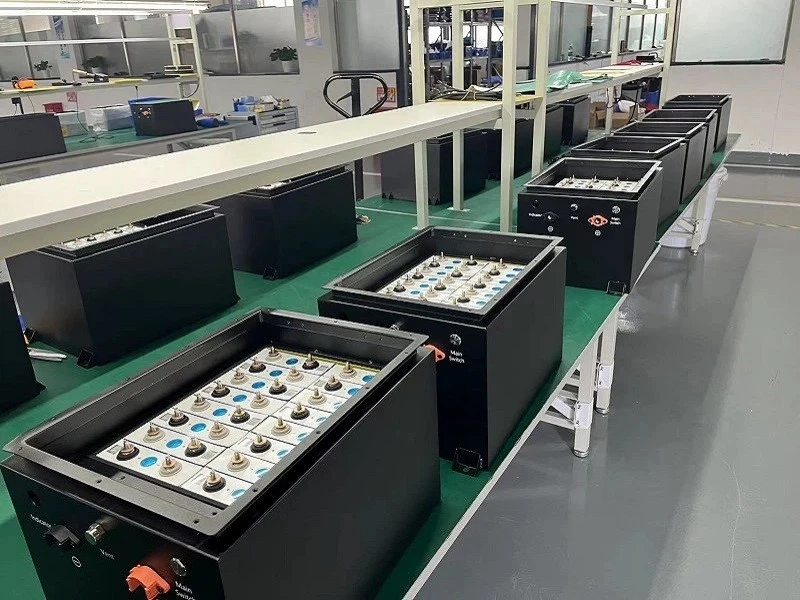
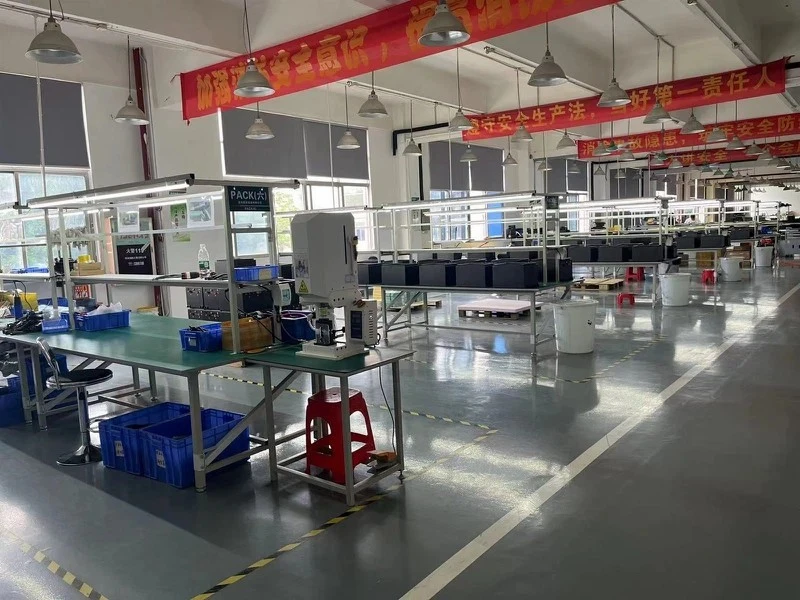
Our Factory
Pailort Materials Co., Ltd, an innovative lithium battery market leader and professional lithium battery manufacturer integrating R&D, production, sales and service, was founded in 2015 and covers an area of 8000 square meters.

FAQ
As one of the leading lithium battery for marine enterprises in China, we warmly welcome you to wholesale discount lithium battery for marine in stock here from our factory. All customized batteries are with high quality and competitive price. For quotation, contact us now.
lithium battery for marine aquaculture, industry of golf cart battery, connection of golf cart battery